
Manage solar heat, soften glare, and keep the clear visibility and sleek look that make your vehicle inviting.
Strong sunlight can make a car interior uncomfortable or create glare across your windshield and dashboard. Ceramic window tint offers a way to improve solar control without automatically choosing dark or highly reflective glass.
Simply Cool helps drivers and vehicle owners in Salt Lake City, Heber, Park City, and nearby Utah communities compare ceramic window film for their vehicle windows. We’ll help you weigh heat performance, light transmission, and appearance before choosing a product.
How Ceramic Window Film Works
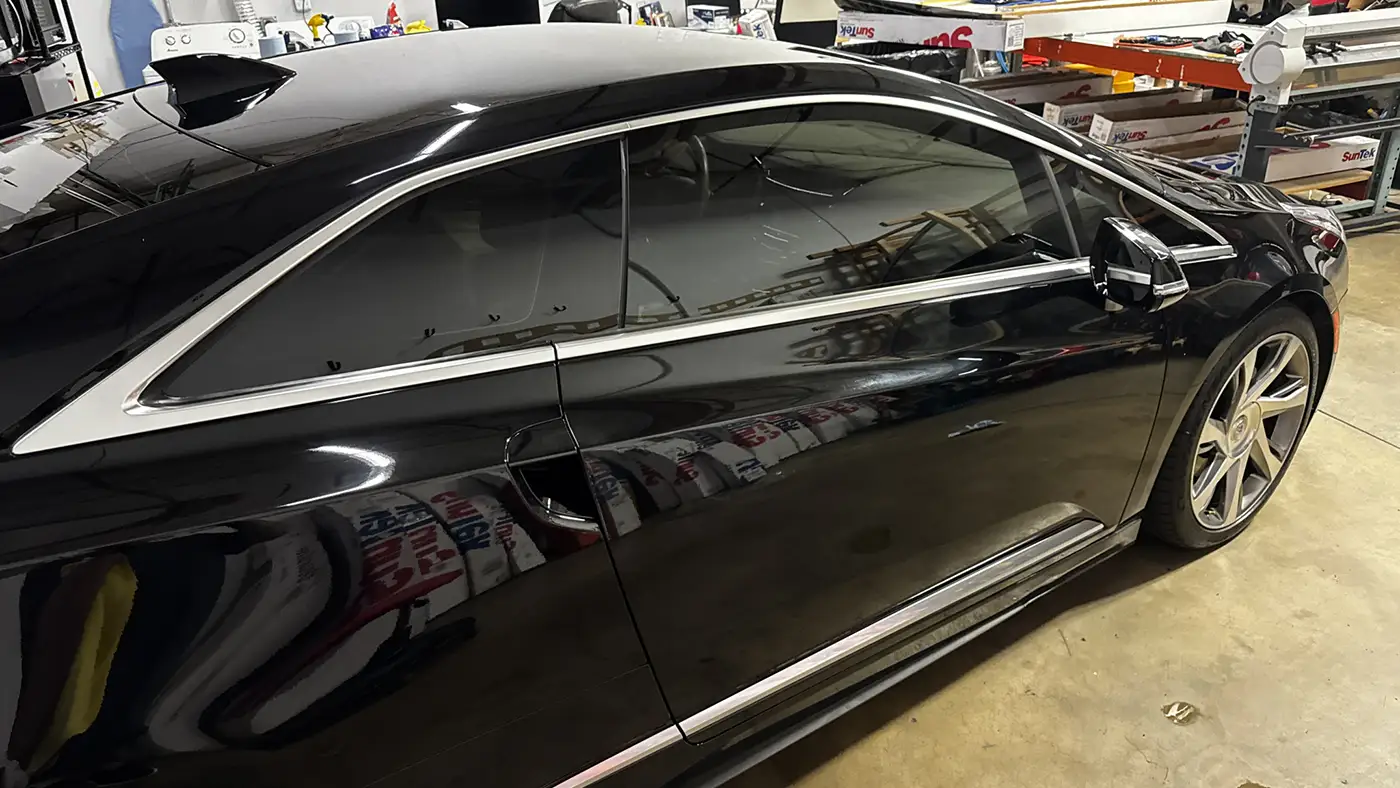
Ceramic window film is a high-performance automotive window film embedded with microscopic, non-metallic, and non-conductive ceramic nanoparticles instead of traditional dyes or metal layers. Non-metallic ceramic products offer an alternative to films that rely on a reflective metal layer. Some products combine technologies, so the selected film’s construction matters.
When comparing ceramic film for windows, look at:
- Infrared heat control: Ceramic technology can reduce infrared transmission. Infrared rejection describes only part of solar performance, so compare total solar energy rejection as well, using ratings for the relevant glass type.
- Visible light transmission: VLT describes how much visible light passes through the filmed glass. Higher VLT generally means more daylight; lower VLT may offer stronger glare control.
- UV protection: Ceramic film can reduce UV transmission. Confirm protection using the selected product’s specifications. UV reduction helps address one cause of fading, but heat and visible light also contribute.
- Non-metallic construction and reflectivity: Some ceramic films provide solar control with a neutral color and relatively low reflectivity. Neither a metal-free construction nor an almost invisible appearance should be assumed from the ceramic label alone.

Key Benefits for Utah Drivers and Vehicle Owners
Heat Control With a Choice of Shades
Ceramic tint can help make sun-exposed vehicle interiors more comfortable while offering a choice of light-transmission levels. The actual result depends on the product, existing glass, window orientation, and shading. No single heat-rejection percentage applies to every ceramic film.
Glare Reduction for Everyday Activities
The right shade can soften bright sunlight on your dashboard and vehicle screens. A very light film may offer less glare reduction than a darker option, even when it provides useful heat control. Discuss the balance that best suits your driving experience.
Views and a More Neutral Appearance
Applied directly to the glass, ceramic film can preserve outward visibility without relying on temporary sunshades. Some products offer lower reflectivity than metalized film types. Compare samples for your vehicle in various lighting settings, because shade and natural sunlight affect visibility.
Options for Automotive Glass
Ceramic film suits all types of auto glass where heat rejection and a clean appearance are top priorities. Explore our service options to discuss tinting for your car, truck, or SUV.
Comparing Ceramic Window Film With Other Film Types
Ceramic is a product category, not a guarantee of better performance in every setting. Compare specific films on the same glass type, along with their appearance, warranty, and installed cost.
Compare | Ceramic film | Dyed film | Reflective metalized film |
Construction | Ceramic technology; check for hybrid layers | Dyes provide tint | Metal layers provide solar control |
Appearance | Often neutral with lower reflectivity | Tinted; shade varies | More reflective; product-dependent |
Heat and daylight | Compare TSER and VLT on your glass | Compare TSER and VLT on your glass | Compare TSER and VLT on your glass |
Selection | Check compatibility, warranty, and cost | Check compatibility, warranty, and cost | Check compatibility, warranty, and cost |
- Discuss your priorities: Tell us when your car feels hottest, when glare affects driving, and how dark you want your shade to be.
- Review the glass and film options: We consider the existing glazing, coatings, sun exposure, and suitable product specifications. Compatibility and warranty terms should be reviewed before installation.
- Prepare and apply the film: For a suitable selection, the glass is cleaned and the film is cut and applied for the window. Application requirements depend on the product.
- Review curing and care: Ask about the selected film’s curing time, cleaning instructions, and warranty so you know what to expect after installation.
Simply Cool brings more than 20 years of window tinting experience to Utah automotive projects. Professional selection matters because an incompatible film choice or proper VLT compliance is key to legal and safe driving.
Our Film Selection and Installation Process
Simply Cool brings more than 20 years of window tinting experience to Utah automotive projects. Professional selection matters because an incompatible film choice or proper VLT compliance is key to legal and safe driving.
Discuss your priorities
Tell us when your car feels hottest, when glare affects driving, and how dark you want your shade to be.
Review the glass and film options
We consider the existing glazing, coatings, sun exposure, and suitable product specifications. Compatibility and warranty terms should be reviewed before installation.
Prepare and apply the film
For a suitable selection, the glass is cleaned and the film is cut and applied for the window. Application requirements depend on the product.
Review curing and care
Ask about the selected film’s curing time, cleaning instructions, and warranty so you know what to expect after installation.
Frequently Asked Questions
What is ceramic window tint?
It is a window film that uses ceramic technology to help control solar energy, engineered specifically for automotive glass.
Is ceramic window tint better than standard film?
It depends on the comparison and your priorities. Ceramic may suit a preference for non-metallic construction or a neutral look. Another film may be a better fit for a different budget or performance goal.
Does ceramic window film reduce heat?
It can reduce solar heat entering through the glass. The result depends on the product and the existing glazing. No single heat-rejection figure applies to every ceramic film.
Will ceramic tint make my windows look dark?
Not necessarily. Ceramic film comes in different light-transmission levels. Lighter options admit more daylight, while darker options change the appearance more noticeably.
Can ceramic window tint be installed on all vehicle windows?
Yes, provided the shade complies with local Utah auto tint laws for front side windows, rear windows, and windshield top strips.
Ready to Compare Ceramic Film for Your Vehicle?
Call: (801) 901-0255Tell us about your car, truck, or SUV, the windows you want to tint, and the look you prefer. We’ll help you consider suitable ceramic film options without relying on a headline heat-rejection figure alone.
Call or text (801) 901-0255 to discuss your project.